The strength and influence on a planet is partly determined by its proximity to other planets (Conjunction) and particularly the Sun (Combustion) and the Aspects of the planets what each planet sees.
The qualities of the Graha are also affected by the presence of other Grahas in the signs it rules. For example, Hitler has Jupiter in Sagittarius so Jupiter qualities are reinforced
Conjunctions
Any 2 planets which are placed in the same sign are called Conjunct. Planets that are conjunct will influence each other a great deal. The smaller the distance is between the planets, the stronger the interaction is. However, it is not auspicious for the planets to be closer than a degree.
Also, any planet which is closer than 5 degrees from the Sun will noticqably get afflicted by the “heat” of the Sun, and is called combust. (The exact distance required for combustion is different for every planet).
In a Conjunction not only do the planets exchange their own characteristics, but also the significations of the lordships. This can create a rather complex interaction if each planet rules two houses! Each planet will carry the significations of each house it rules, and its own significations. All these significations will influence and be influenced by the significations of the other planets and the houses that planet rules. This whole interaction will be taking place in the house and sign where the conjunction takes place, bringing in yet another set of significations.
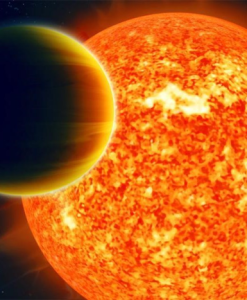
Combustion
When a true planet is within 6 degrees of the Sun, it is said to be combust. If within 3 degrees, it is seriously combust. A combust planet has difficulty expressing its gifts, is weaker, and the themes of the houses it rules can become challenging.
When a Graha is exactly opposite of the Sun, it is visible for the greatest number of hours during the 24 hours. When it is in such a position, the Graha rises when the Sun sets, and it sets when the Sun rises. In other words, the Graha is visible during the entire night time. This is considered to make the Graha most auspicious.
On the other hand, an exact conjunction with the Sun is least auspicious. Due to the overwhelming amount of light of the Sun, the Graha is not visible at all, not at day and not at night. When the distance is within a few degrees, the Graha is said to be Combust.
The exact distance varies per Graha, and Mercury and Venus who are always close to the Sun anyways, are more resilient. Any position between exact opposition and exact conjunction is rated according to its distance from the Sun.
The auspiciousness increases gradually from nothing at conjunction, to neutral at 90 degrees distance, to full at opposition.
Aspects
There is another way a planet can influence signs and other planets: by aspect.
When one planet “sees”, i.e. influences, another planet (or house) by being in a specific angular relationship with the other planet (or house).
All planets aspect the house they occupy and the seventh house.
Whole Sign Houses: Unlike modern Western astrology, Vedic astrology uses whole sign houses, I.e. where each house is one whole sign (i.e. begins at zero degrees and ends at thirty degrees of the sign), and every planet in one sign occupies the same house as the others in the same sign.
Vedic astrologers use Whole Sign aspects, where planets affect every planet in the aspected house, regardless of orb.
Mutual Aspects: In Vedic astrology, when planets occupy the same house or are in opposite houses, they are said to aspect each other, I.e. to see and influence and impact each other, mutually. (In classical Jyotish texts, planets in the same house are said to be “in association” with each other.)
Aspects to Houses: All planets aspect the house opposite to the one that they occupy, whether there are any planets in that house or not.
A complete overview is given in the Aspects on Planets report. Every planet will aspect the sign and planets opposite to itself. The aspect will “transmit” the characteristics of the planet and its lordships onto the aspecting planet. Mars will also aspect the sign and any planets which are in the 4th and 8th sign position from itself. Jupiter will also have additional aspects, on the 5th and 9th signs from itself. Saturn aspects the 3rd and 10th sign from itself. In all cases, the aspect will be strongest on the degree equal to the aspecting planet. For example, the aspect of Mars on the 4th sign from itself will be strongest on exactly the 90th degree from Mars. If Mars is in 12 degree Taurus, then the 12th degree of Leo will be fully aspected. Other positions in different degrees of Leo will be aspected, but not as strongly. The intensity of the aspect will gradually decline when further away from the exact aspect. There is one special case here: the aspect on the 8th sign from Mars will be fully strong from 180 to 210 degrees from Mars (in other words, any planets which are between opposition and the 8th sign from Mars are fully aspected). Mutual aspects Each aspect represents a one-directional influence from the aspecting planet to the aspected planet. Of course if the aspect is made to a planet in the opposite sign, then that planet will cast an aspect as well. Therefore, planets opposite of each other will always aspect each other and exchange influences, just like a conjunction. Another case where this happens, is when Saturn is in the 4th from Mars. Mars will be aspecting Saturn by its aspect on the 4th, and Saturn will aspect Mars by its aspect on the 10th.
A complete overview is given in the Aspects on Planets report. Every planet will aspect the sign and planets opposite to itself. The aspect will “transmit” the characteristics of the planet and its lordships onto the aspecting planet.
Mars will also aspect the sign and any planets which are in the 4th and 8th sign position from itself.
Jupiter will also have additional aspects, on the 5th and 9th signs from itself.
Saturn aspects the 3rd and 10th sign from itself.
Unilateral Aspects: Mars, Jupiter, and Saturn have special unilateral aspects (I.e. they see and influence other planets that do not see or influence al them).

Mars aspects the 1st, 4th, 7th and 8th
Jupiter aspects the 1st, 5th, 7th and 9th
Saturn aspects the 1st, 3rd, 7th and 10th.
In all cases, the aspect will be strongest on the degree equal to the aspecting planet. For example, the aspect of Mars on the 4th sign from itself will be strongest on exactly the 90th degree from Mars. If Mars is in 12 degree Taurus, then the 12th degree of Leo will be fully aspected. Other positions in different degrees of Leo will be aspected, but not as strongly. The intensity of the aspect will gradually decline when further away from the exact aspect. There is one special case here: the aspect on the 8th sign from Mars will be fully strong from 180 to 210 degrees from Mars (in other words, any planets which are between opposition and the 8th sign from Mars are fully aspected). Mutual aspects Each aspect represents a one-directional influence from the aspecting planet to the aspected planet. Of course if the aspect is made to a planet in the opposite sign, then that planet will cast an aspect as well. Therefore, planets opposite of each other will always aspect each other and exchange influences, just like a conjunction. Another case where this happens, is when Saturn is in the 4th from Mars. Mars will be aspecting Saturn by its aspect on the 4th, and Saturn will aspect Mars by its aspect on the 10th.
A complete overview is given in the Aspects on Planets report.
Mutual Aspects: In Vedic astrology, when planets occupy the same house or are in opposite houses, they are said to aspect each other, I.e. to see and influence and impact each other, mutually. (In classical Jyotish texts, planets in the same house are said to be “in association” with each other.)
Aspects to Houses: All planets aspect the house opposite to the one that they occupy, whether there are any planets in that house or not
Every planet will aspect the sign and planets opposite to itself. The aspect will “transmit” the characteristics of the planet and its lordships onto the aspecting planet. Mars will also aspect the sign and any planets which are in the 4th and 8th sign position from itself. Jupiter will also have additional aspects, on the 5th and 9th signs from itself. Saturn aspects the 3rd and 10th sign from itself. In all cases, the aspect will be strongest on the degree equal to the aspecting planet. For example, the aspect of Mars on the 4th sign from itself will be strongest on exactly the 90th degree from Mars. If Mars is in 12 degree Taurus, then the 12th degree of Leo will be fully aspected. Other positions in different degrees of Leo will be aspected, but not as strongly. The intensity of the aspect will gradually decline when further away from the exact aspect. There is one special case here: the aspect on the 8th sign from Mars will be fully strong from 180 to 210 degrees from Mars (in other words, any planets which are between opposition and the 8th sign from Mars are fully aspected). Mutual aspects Each aspect represents a one-directional influence from the aspecting planet to the aspected planet. Of course if the aspect is made to a planet in the opposite sign, then that planet will cast an aspect as well. Therefore, planets opposite of each other will always aspect each other and exchange influences, just like a conjunction. Another case where this happens, is when Saturn is in the 4th from Mars. Mars will be aspecting Saturn by its aspect on the 4th, and Saturn will aspect Mars by its aspect on the 10th.

