Course Content
INTRODUCTION
your Astrology: your birth right that gives understanding of the workings of the Universal Forces that include action and control, wisdom, enjoyment, life, peace, intellect and love. You were born into this world with an Agenda to complete - a choice of destinies reflected in your birth chart. The sooner you understand that Agenda and your strengths and weaknesses, the better you can capitalize on your strengths and resist your weaknesses, the better your life will fare. Life is all about choices: temptations resisted and opportunities seizedBasic Interpretation of the birth chart will introduce you to the most basic concepts and elements in Vedic Astrology. It covers the zodiac used, the way the chart is drawn, and gives you an understanding of the Grahas (Planets), Rashis (signs), Bhavas (houses) and Nakshatras. It also introduces you to the lordships of the Bhavas, and the use of the Lagna (Ascendant), which are based on the relationship of the Grahas and the Bhavas, and the Rashis and the Bhavas respectively. This section also explains the most basic interaction between the Grahas: Conjunctions and aspects. Interpreting Planets provides an in-depth approach to understanding a unique nature of each Graha in any particular horoscope. This includes a precise distinction between the strength, auspiciousness and quality of a Graha. Interpreting houses elaborates on the various techniques used to interpret how a bhava will function in the chart and estimate how the areas of life represented by the bhava will manifest in one's life. Interpreting the chart integrates the previous two sections and completes a basic level of the chart analysis. Varieties of charts introduces you to some other types of charts that are often used to enrich the basic analysis of the birth chart. All the principles of the earlier section can now be applied in additional contexts. Divisional charts elaborates in detail on the use of one of the chart types introduced in the previous chapter. This chapter concludes the first part of the tutorial, dealing with interpreting the chart. Predictions The earlier chapters dealt with interpreting the chart without concern for the timing of life events, and predicting when various potential will manifest. The next three sections deal with the subject of timing the predictions. The Dashas section will explain how the planets are activated in cycles, and cycles within cycles. The Transits section will explain how the ongoing movement of the planets affects the natal chart. The Varshaphala section will teach you the intricacies of the chart cast on one's birthday, or rather, the exact time that the Sun re-visits its natal position. Other topics The Compatibility section shows you how you can determine the romantic compatibility between 2 people. Remedial measures briefly covers what one can do to correct negative or undesirable tendencies in life.
0/6
PROCESSION OF THE EQUINOX
Added Refinement
0/2
THE LAW OF KARMA
The Basis of Astrology is the Law of Karma: that Actions in this life affect Outcomes in the next life. Birth time Astrology is possible if there is reincarnation of souls to fulfil their Karma Karma is the spiritual principle of cause and effect, where intent and actions of an individual (cause) influence the future of that individual (effect). The Horoscope is a map of the heavens (planets) plotted on paper as a chart with the twelve signs of the zodiac placed in twelve numbered houses. From this map of the heavens we can read the planetary influences on human beings, as well as the amount of free will people possess.
0/1
VEDIC CHART AND AREAS OF LIFE
Each House bhava represents a number of areas of life. Whereas Planets (Grahas) indicate the different aspects of our consciousness, the bhavas indicate what areas of life that consciousness is most strongly connected to, projected on and influenced by the planets influence. The Signs (Rashis) color that connection and give it very specific qualities
0/4
TRANSITS
For an event to happen in your life you first need the specific Birth Time Astrology: Example: Saturn in the 9th house is good for awareness: The placement of Saturn in the ninth house can make the natives religious, pious and spiritually inclined. If you were born 8 hours before: Saturn in the 5th house produces seriously sick children. The time you were born is prompted by Sanchita Karma: the Accumulated Karma of all your Lifetimes. It would be impossible to experience and endure all these Sanchjta karma in one lifetime. Drude (Heavy) Karma takes many lifetimes to conquer. Adrude (Light) Karma will take less effort to overcome. Prarabdha Karma is experienced through the present body and is only a part of Sanchita karma that is ripe (Prarabdha Karma) and to be addressed this lifetime. Prarabdha Karma is a collection of past Sanchita karmas that your soul selected to be experienced through this present body, in this present life. From this stock of Sanchita karma, a handful is taken out to address in one lifetime and this handful of actions, which have begun to bear fruit and which will be exhausted only on their fruit being enjoyed or addressed is known as Prarabdha karma. Prarabdha Karma is past Life Karma shown by the Position of your Ketu in your Vedic Chart. Prarabdha Karma: Known as the ‘purpose’ karma of this present lifetime, where the purpose is to fulfill part of your karmic dues, experiences and lessons set out for this incarnation. Prarabdha Karma are those lessons and experiences that we must absolutely face in this lifetime, no questions asked. Prarabdha Karma is akin to a scoop of Karma taken from the massive pool of Sanchita KarmaYour Birth Time Astrology is subsequently influenced by your choices this lifetime: Kriyamana (Present Karma): Every thought word, deed, decision & action we create in our current life. All Kriyamana karmas flow from Sanchita karma and consequently shapes our future. Kriyamana is the karma we are creating with our desires. Kriyamana karma, or present karma, refers more specifically to the instantaneous or immediate Kriyamana Karma the consequences of your actions and is represented by the position of Rahu in your Vedic Chart. Distinction can be made between Kriyamana Karma that emphasizes the cause-and-effect between your actions and their immediate results and Agami Karma: future karma generated by your current actions and choices with consequences later in this lifetime or in future lifetimes. You need also to be running the planets Dasha or Bhuki: Running the particular Planet;s Dasha (running Mars Dasha) or Mars Bhukti (Saturn into Mars) and your present time’s astrology is influences by your present day astrology including the TRANSITS of planets through a particular house That will prompt the ripening of a particular Karma That is precipitated by the transit of the planet through the house that contains the Karma in question How does Karma become Ripe? For something to happen to you, you need 3 influences 1. A Planet in a house that controls a Concern: Mars in the 12th house means the Loss of Freedom 2. Run the particular Planets Dasha (running Mars Dasha) or Mars Bhukti (Saturn into Mars) 3. The Transit of the planets across that House – Then you go to jail for as long as the Sanchita Karma lasts. be it for a Month as Mars transits the 12th House. An AHA moment Tulsidas, a Hindu saint, said: "Our destiny was shaped long before the body came into being." We do have Free Will: Limited to how Aware and Disciplined we are and the Weight of Karma As long as the stock of Sanchita Karma lasts, there is the cycle of birth and death. Part of Sanchita Karma is taken as Prarabdha karma for being enjoyed or endured this lifetime,. A Jiva (Soul) cannot attain moksha (liberation) from the cycle of birth and death, until the accumulated Sanchita Karmas are completely exhausted. All Astrological Yogas indicate past Karma – the position of planets in your chart control impulses and influences the trajectory of this life Example: We just finished doing Katlyn’s astrology, she has Rahu in the 12th house. We predicted Kaitlyn has real knowledge/focus on 12th house issues of death. Without knowing her Vedic Chart she already does elaborate death ceremonies to gain insight. An AHA moment revealed from her chart. But she was also warned she has a dangerous Yoga: From one act of anger, she could lose Everything, house, home and family.Rahu in Vedic Astrology represents Desires you pursue this lifetime. So Rahu is a blessing or a curse depending on the house that is in. Be careful what you wish for. If you deeply desire something, you will manifest it in your life, now or in the future.So say you have Mars in the 12th house: you are likely to loose your freedom either by Jail, Illness or Mental Instability such as Agoraphobia Other parts of the chart will tell which: Say its Jail You are likely to go to Jail when you are running Mars Dasha or Bhukti and Mars transits the 12th house and be released when Mars exits the 12th house The Effect of Ketu in the 12th house is prompted by the Transit of Ketu over the position of Ketu in the 12th house. Rahu in the 6th house is Good
0/2
NEW TOPIC
DESTINY and KARMA:
THE LAW OF KARMA The Basis of Astrology is the Law of Karma: That Actions in this life affect Outcomes in the next life. Birth time Astrology is possible if there is reincarnation of souls to fulfil their Karma / Destiny Karma is the spiritual principle of cause and effect, where intent and actions of an individual (cause) influence the future of that individual (effect). The Horoscope is a map of the heavens (planets) plotted as a chart with the twelve signs of the zodiac placed in twelve numbered houses. From this map of the heavens we can read the planetary influences on human beings, as well as the amount of free will people possess
0/2
LAGNA – ASCENDANT
Lagna Ascendant – influences your Character The Ascendant is what is coming over the Horizon at the time of your birth While Western astrology assigns pre-eminence to the Sun sign, Jyotish awards that position to the Ascendant, which gives more insight into your life particulars than does any other factor in the horoscope. You can look up typical Cancer traits There are a few reliable principles regarding predictions based on the Ascendant: • What is the Constellation of the Ascendant and its ruler • The strength of the planets in the various houses • Relationship of the Lagna lord with the owners of various houses • The house the Sun rules in the chart • The ownership of the other houses in the chart Own House JB So important questions are: What Constellation is in the Ascendant? What planet rules what house and in what house is that ruler found? How do the various planets aspect each other? And in what Dasha (your Major Time Period) will its effect be felt?My Lagna is Sagittarius.
0/3
The GRAHAS (PLANETS)
Planets There are nine Grahas “planets” in Indian astrology: Only five of them are planets, one is a star, one is a moon, and the remaining two (Rahu and Ketu) are special astronomical points where the Sun and Moon eclipses occur
0/5
PLANETARY RULERSHIP OF THE SIGNS
Vedic astrology employs traditional sign Rulerships: Mars rules Aries and Scorpio, Venus rules Taurus and Libra, Mercury rules Gemini and Virgo, the Moon rules Cancer, the Sun rules Leo, Jupiter rules Sagittarius and Pisces, and Saturn rules Capricorn and Aquarius.
0/1
STRENGTH OF PLANETS
The Shadbala is the calculated score by which an astrologer can assess the strength of the planet. The effects of a planet whether auspicious or inauspicious will be in proportion to its strength. This Shadbala strength calculation is based on the different 'Bala' or strength factors. In ascendant, Jupiter and Mercury are strong. In North, Sun and Mars are strong in 10th house. In west, Saturn is strong and Venus and Mars acquires the directional form of strength in South in 4th house. In Vedic astrology, the strength of a planet depends on its natural qualities and how it interacts with other planets. Planets also have a permanent strength, called Naisargikabala, that they produce regardless of their position. The Sun has the greatest permanent strength, while Saturn has the least. In descending order of strength, the planets are: Sun, Moon, Venus, Jupiter, Mercury, Mars, and Saturn.The capacity of a particular planet to strongly influence your life and choices depends upon its planetary strength. This strength is determined by such factors as: • The aspects between planets that are friends or enemies • The friendliness of the ruling planet of the house in which the planet is found • Directional strength. A planet placed in its exalted Constellation attains is greatest strength for good or evil.Auspiciousness and Quality: The qualities of the Graha determined by it sign, Nakshatra position etc. will be expressed most advantageously when the planet is auspiciously placed. The qualities will be expressed with struggle and grief when the Graha is afflicted. Of course, in most cases there is no black and white situation, and there is some balance of afflictions and supporting factors, that bring out the qualities of the planet in a variety of ways. Since the strength of the planet indicates how potent it is to manifest its qualities, it is best to have the Graha with desirable qualities be strong, and the Graha with negative qualities be weak. However, this concept of "what is best" is highly subjective to one's purpose in life. In the life of a monk, a strong and unafflicted Venus may be out of place, as it will likely cause marriage. In the life of a wrestler, one probably would not have much use for a strong Moon. And a powerful Sun, would not serve people whose destiny it is to be in service.
0/3
PLANETARY CONDITIONS
This lesson deals with the strength and character of a planet based on its position and aspects: Moolatrikona, Own house, Vargottama, Combustion, Retrograde Planets, Planetary War, Planetary Friendship, Mangal, Kujo Dosha, House Position of Ketu, Dispositor
0/7
RASHIS (CONSTELLATIONS/SIGNS)
Vedic astrology and zodiac signs differ in how they track the positions of planets and constellations: Vedic astrology Uses the sidereal zodiac, which measures the motion of planets against the fixed positions of stars. Vedic astrology is based on the Vedas, the oldest sacred texts of Hinduism, and the belief that a person's karma is related to the positions of the planets and stars. Vedic astrology also includes the sun, moon, and seven planets, each with a name and dates that differ from Western astrology. Zodiac signs Use the tropical zodiac, which measures the motion of planets against the position of the sun on the spring equinox. A zodiac sign is a symbol that represents a person's personality, emotions, and motivations. Each person has a zodiac sign for each planet, the moon, and the sun. Because of the Earth's tilt and whirl, known as precession, stars and constellations don't remain fixed. Each star moves roughly one degree every 70 years, so a person's Vedic zodiac sign may differ from their Western zodiac sign
0/2
ANOTHER TOPIC
ASTROLOGICAL YOGAS
0/1
PLANETS IN VARIOUS HOUSES
0/1
DASHAS AND BHUKTIS
All of the analysis applied so far has ignored Timing, without having any clue when events will take place.We have been interpreting the birth chart, but we have not made timed predictions on your life in general.The effects of each Yoga is seen in the Dashas and Bhukti periods when the particular planets involved are activated: so we refer to the tables of Dashas and Bhuktis to predict when a particular Yoga will emerge.
0/3
REMEDIES
Remedies to strengthen weak or well-placed planets include Gems, Meditation and Tantric practices.
0/2
PRASNA – REAL TIME ASTROLOGY
0/1
ACKNOWLEDGMENT
0/1
Vedic Astrology

Karakas

The meaning of a house is principally influenced by two planets: its ruler & its karaka (significator). A karaka is the planet, which rules the matter under consideration.

A Yoga Karaka is a planet that is very auspicious by simultaneously owning an angle (Kendra) and trine house (Kona).

Thus, Saturn is the yoga-karaka for Taurus and Libra,
Mars for Cancer and Leo,
Venus for Gemini, Virgo, Capricorn and Aquarius,

and the Moon, for Scorpio sign.

Jupiter is a yoga karaka for Sagittarius ascendant

Jupiter, Mars and Saturn also have further influence through special aspects

Own House: Any planet in its own house, in a Kendra is more powerful

Or any Planet in the ascendant. Jupiter is a Yoga Karaka (Kendra +Kona) in a Sagittarius Ascendant 

The more auspicious Yogas that are in a horoscope, the more likely it will be for the person to be someone of note who will rise through life to be powerful and prosperous. It is important for the Dashas (planetary period); of the Grahas (planets) involved to occur at the appropriate periods of life. The Grahas involved in the Yogas must be strong (not weak because of combustion, placement in unfriendly Rashis or inauspicious avasthas, or weakness in sub-charts). The less such a Yoga is interfered with by the impact of other Grahas, particularly malefics, the more you will experience its energies 
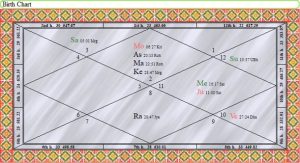
Vikash

For Taurus Lagna, Venus, Saturn and Mercury are the functional benefic planets. Normally when any of these planets are in either Kendra or Trikona with power and posited harmoniously between each other then each of them should be capable of conferring Raja Yoga.
However because of house ownership, in descending order Saturn, Mercury, Sun and then Venus are the most beneficial planets for Taurus Lagna.

Atma Karaka & Amaya Karaka

Planets (Grahas) have a set of characteristics that change according to the closeness of the planet to the end of the sign that is sits in, measuring infancy to maturity.

The closer to the end of the sign that it sits in the more important the Graha .

MyAtma Karaka (AK) is Jupiter the significator of the soul’s desire. See AK in table page 1.
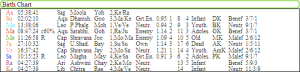
Atma means Soul and Karaka means significator. The Graha that is in the highest degree is called the Atma Karaka – the significator of the self with a significant influence on your deepest nature. According to Vedic philosophy a soul is reborn because it has unfinished desires that were left unfulfilled in the previous lives and the soul) is born again to get another opportunity to satisfy them.

If the Atma Karaka is strong and well placed, the afflictions of the other Karakas do not prevail.

Albert Einstein’s Atma Karaka was Venus in 10th House

Amatya Karaka (AMK): The Graha that is in the next highest degree is the Amatya Karaka that signifies Ministership in your chart is Mercury AMK         .

The Bhava Karaka is the planet that has great affinity for the primary matters ruled by the house under consideration. For instance, because Jupiter and the 5th house rule children, Jupiter becomes the Bhava Karaka the significator of the soul’s desire for 5th house Children, Past Karma and Intellect

 1st House         Sun     Health and Vitality

2nd House         Jupiter    Wealth and Family

3rd House           Mars      Younger Siblings, Courage and Enterprise, Other people

4th House           Moon    Mother and Emotions, Venus Vehicles, Mercury Education

                           Mars   Property

5th House            Jupiter   Children, Speculation, Statecraft, Advise, Intuition,

                                          Previous Karma, Discernment

6th House            Mars     Acute Disease, Litigation, Bodily Affliction, Enemies,                                                Accidents

                           Saturn   Debt. Chronic Disease and the Emergency Ward

7th House            Venus    Marriage and Relationships, Passion

8th house             Saturn    Loss, Perversions, Death/Longevity, Wills 

                                    Inheritance, Accidents, Bankruptcies, Enemies

                                     Sudden Unexpected Torment, Chronic Disease, Hospitals

9th House             Jupiter     Teachers/Preceptors, Higher Education,

                                                              Spiritual Quests, Charity, Good or Bad Luck

                             Sun             Father, the Soul

10th House            Mercury   Commerce, Sun Government and Authority, Fame

                              Saturn        Tradition and Employment Jupiter Professions

11th House             Jupiter        Elder Siblings, Friends and Gains

12th House             Saturn        Imprisonment, Solitude, Losses, Loneliness.

                                                 The End of things.

The favourable or the unfavourable situation of the Karaka gives favourable or unfavourable results signified by it, and by the bhava and the bhava-lord. The effects of planets as Karakas (‘functional benefics’) or Akarakas (‘functional malefics’) or Marakas (‘death-inflicting’) are related to the Rashis or signs. Generally speaking, each bhava has one or more Karakas or significators but it is bad for the bhava-lord or the bhava-karaka to occupy an evil Trikasthana – the 6th, the 8th or the 12th from the Lagna or from the concerned bhava.
The Sun is the karaka of the Lagna, the 9th and the 10th; Jupiter is the karaka of the 2nd, 5th, 10th and the 11th; Mars is the karaka of the 3rd and the 6th; the Moon is the karaka of the 4th; Mercury is the karaka of the 4th and the 10th; Saturn is the karaka of the 6th, 8th, 10th and the 12th and Venus is the karaka of the 7th house from the Lagna; these are the Bhava-karakas

The Grahas also have a set of significations that changes according to the degree within the sign.

The degree within the sign is always a number between 0-30,

The closer a Graha is towards the end of the sign, the more important it’s signification is. Because Rahu moves backwards through the zodiac, its position is measured from the end of the sign for this purpose. In other words, you subtract the degree from 30 and use the result.
Whichever Graha is in the highest degree, is called the Atma karaka. “Atma” means self or soul, and “karaka” means significator in Sankrit.

Therefore, the Graha that becomes atma karaka is a significator for the self. Whatever influences on the atma karaka are found in the chart, will have
a significant influence on the person’s deepest nature.

The Graha that is in the next highest degree is called the Amatya karaka. The Amatya karaka signifies Ministership. There is almost no information available from the classics, so the use of these karakas has to be obtained from their names, and the few places where references are made.
The Graha that is the 3rd highest degree is called Bhratru Karaka, the 4th is Matru
Karaka, the 5th is Pitru karaka, the 6th is Putra karaka, the 7th is Gnati karaka, the 8th is Stree karaka.
Parashara indicates two systems in this regard: one system considers 8 karakas, and another considers 7 karakas. In case only 7 karakas are considered, the Matrukaraka and Putrakaraka are the same.
Parashara states: “Just as a minister cannot go against the king, the other karakas cannot predominate over the Atmakaraka in the affairs of the native. If the atmakaraka is afflicted, the other karakas cannot give their positive results properly. But if the Atmakaraka is favorable, afflictions on the other karakas cannot prevail”.
Considering only 7 karakas, these are the karakas in your chart:
Chara Karakas.

AK AmK BK MK PK GK DK
Jup Ven Mon Mer Sat Mar Sun
27:10 16:37 13:38 11:26 10:15 08:47 02:02

The following abbreviations are used:
AK: Atma Karaka
AmK: Amatya Karaka
BK: Bhratru Karaka
MK: Matru Karaka
PK: Pitru Karaka
GK: Gnati Karaka
DK: Stree Karaka

YOGA KARAKA

The Yoga-karaka is the planet which rules a Kendra (‘Angular house’) and a Trikona (‘Trine’) simultaneously.

Tapash’s Jupiter in the 1st house rules a Kendra and Trikona

Thus, Saturn is the yoga-karaka for Taurus and Libra,

Mars for Cancer and Leo,

Venus for Capricorn and Aquarius sign.

The Sun, Mercury and Jupiter do not attain this status which the two Lunar Nodes (Rahu and Ketu) can if they are aspected or associated with the lord of a kendra or a trikona.
Yoga-karakas are first rate functional benefics, they are particularly suited to benefit a person materially and in status.

The Astrologies of Einstein and Barry show the importance of the exalted planets in the 10th house of Career
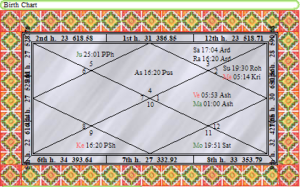
Maggie’s Barry

Barry’s Mars rules the 10th house and 5th house, and is placed in the 10th house. Mars is a Yoga Karaka planet Rules 10th Kendra and 5th Kona, which is very favorable for the 10th house.  A Yoga Karaka is the planet which rules a Kendra (‘Angular house’) and a Trikona (‘Trine’) simultaneously. Dharma and Karma combined. Yoga Karaka confers fame, honour, dignity, financial prosperity, political success, and reputation

The functional nature of Barry’s Mars is Benefic. That makes Mars a very strong Benefic, which means that even though Mars is a natural malefic, the underlying tendencies of Mars brings growth and evolution. Fortunately, Mars is in Mooltrikona in Aries, which helps a little. The placement in the 10th house lets Mars fully express it’s energy in the field of action